
.svg)
Mortgage News
What is mortgage origination? Florida homebuyer's guide
Most Florida homebuyers think mortgage origination is just “signing paperwork at the end.” That misunderstanding alone has caused buyers to lose dream homes, face costly delays, and feel blindsided when a lender says no. Mortgage origination is actually the entire journey from your first loan inquiry to the moment funds are released at closing. Every decision you make along the way shapes whether you get approved, how fast you close, and how much your loan ultimately costs. This guide walks you through every phase so you can move through the process with confidence.
Table of Contents
- Mortgage origination explained: What it really means
- Key steps in the mortgage origination process
- Common obstacles (and solutions) for Florida homebuyers
- How mortgage origination impacts your Florida home purchase
- What most Florida buyers get wrong about mortgage origination
- Expert help for your Florida mortgage origination
- Frequently asked questions
Key Takeaways
Mortgage origination explained: What it really means
Let’s clear up the most common misconception right away. Mortgage origination is not just the application you fill out online. Mortgage origination involves the complete process from applying to receiving approval for a home loan, and it covers every checkpoint between those two milestones.
Think of it like this: origination is the full story, not just the first chapter. The lender is not simply collecting your information. They are evaluating your financial life, assessing the risk of lending you hundreds of thousands of dollars, and determining whether you meet their specific eligibility standards.
Mortgage origination is how lenders answer one core question: “If we lend this buyer money, how confident are we they’ll pay it back?” Every document, credit check, and appraisal is part of finding that answer.
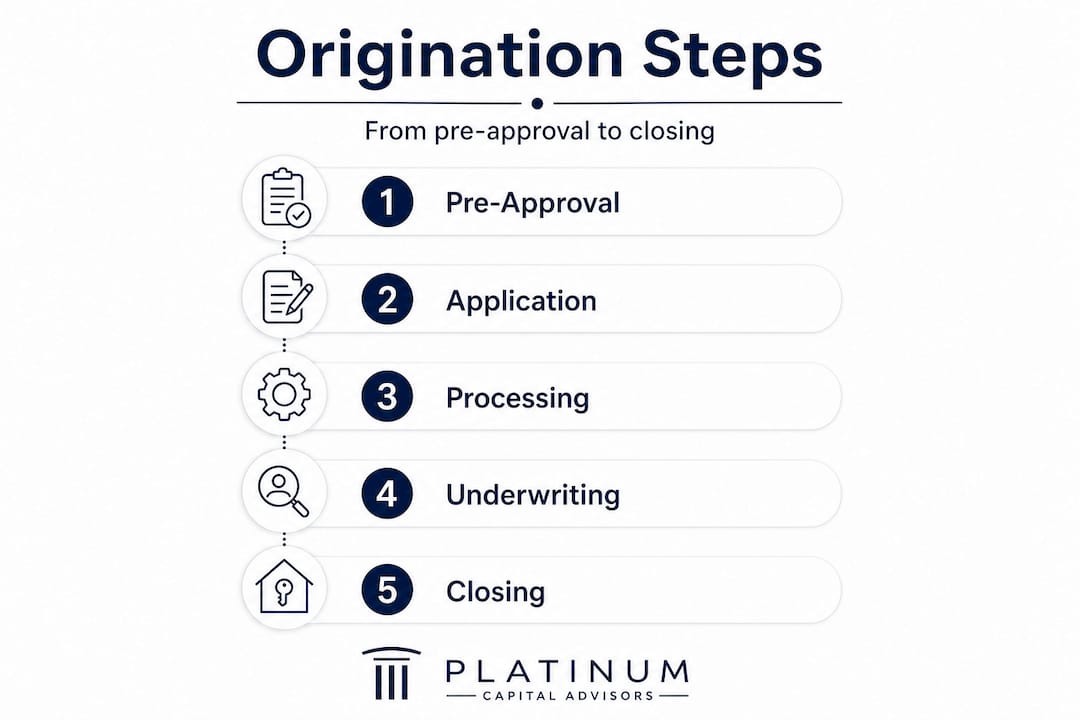
The key stages of mortgage origination include:
- Pre-approval: The lender reviews your credit, income, and assets to estimate how much you can borrow.
- Loan application: You formally apply, providing detailed financial documentation.
- Processing: A loan processor organizes your file, orders an appraisal, and verifies your documents.
- Underwriting: An underwriter reviews your complete file against lender and investor guidelines.
- Closing: You sign final documents, pay closing costs, and receive your loan funds.
Each of these stages has its own timeline, requirements, and potential pitfalls. Skipping ahead or being unprepared at any point can stall the entire process. For Florida buyers searching for mortgage loans in Naples Florida and surrounding areas, understanding this sequence is your first competitive advantage.
Key steps in the mortgage origination process
With a general understanding of mortgage origination, here’s a straightforward roadmap for what you’ll go through as a Florida homebuyer. This is not a vague overview. These are the actual stages with real checkpoints you should track.
- Get pre-approved. Before you tour a single home, get a pre-approval letter. This tells sellers you're serious and gives you a realistic price range. You'll submit income documents, allow a credit inquiry, and receive a conditional loan amount.
- Make an offer and go under contract. Once your offer is accepted, the origination process accelerates. Your lender needs the purchase contract to move forward.
- Submit your full loan application. This is the official "1003" application. You'll provide complete details about employment, assets, debts, and the property itself.
- Provide required documents. Approval depends on meeting lender criteria including your credit score, debt-to-income ratio, and a complete documentation package.
- Appraisal and title search. The lender orders an independent appraisal to verify the property's value. A title company checks for liens or ownership issues.
- Underwriting review. This is the deepest evaluation phase. Expect conditions, meaning the underwriter may ask for additional letters, updated documents, or clarification.
- Clear to close. Once underwriting approves your file, you receive a Closing Disclosure, which details your final loan terms and costs.
- Close your loan. You sign final documents, funds are released, and you receive the keys.
Pro Tip: In Florida, coastal and flood zone properties add extra steps. Your lender may require a flood elevation certificate, and flood insurance must be in place before closing. Build extra time into your schedule if your target property is near water.
Here’s a look at the typical documents needed at each stage:
Florida buyers also face a few state-specific considerations that buyers in other states don’t encounter. Property taxes here are paid in arrears, which affects how your closing costs are calculated. Homestead exemption applications have deadlines that a local lender will help you navigate. For buyers exploring local home loan options, working with a lender who knows these Florida nuances saves time and prevents surprises.

Common obstacles (and solutions) for Florida homebuyers
After covering the steps, it’s crucial to recognize common hurdles that can slow down or jeopardize your loan, and how to tackle them before they become problems.
The most frequent issues that derail origination include:
- Low credit scores. Many first-time buyers don't realize their score needs to be in a specific range for the loan type they want. FHA loans typically require a minimum score of 580 for a 3.5% down payment, while conventional loans usually require 620 or higher.
- Missing or outdated documents. Issues like missing documents or low credit can delay or derail origination entirely. Lenders need current documentation, which means pay stubs from the last 30 days and bank statements from the last 60 days.
- High debt-to-income ratio. If your monthly debt payments are too high relative to your income, lenders may reduce your loan amount or decline altogether. Paying down a credit card or car loan before applying can shift this number meaningfully.
- Undisclosed debts or employment changes. Changing jobs mid-process, taking out a new car loan, or co-signing someone else's debt during origination can trigger a full re-evaluation of your file.
- Insufficient cash for closing. Florida closing costs typically run between 2% and 5% of the loan amount. Many buyers budget for the down payment but forget about title fees, transfer taxes, prepaid insurance, and escrow deposits.
First-time homebuyers represent a significant portion of the Florida market, and surveys consistently show that many buyers underestimate how much cash they need at closing by thousands of dollars.
Quick solutions make a real difference here. If your credit score is borderline, ask your lender about a rapid rescore, which allows them to update your credit report quickly after you pay down a balance. If paperwork is the issue, create a dedicated folder with every required document before your first lender conversation.
For Florida-specific issues, flood zone designation is a major one. Some buyers discover their dream property sits in a high-risk flood zone only after going under contract. Flood insurance premiums in certain Florida zones can add hundreds of dollars per month to housing costs, which changes your debt-to-income ratio calculation. A lender who understands overcoming origination obstacles in the Florida market will flag this early rather than waiting until underwriting.
Long-term solutions matter too. Building your credit history, saving aggressively for 12 to 18 months before buying, and keeping your employment stable all create a stronger application. These aren’t glamorous tips, but they are the ones that actually determine whether you close.
How mortgage origination impacts your Florida home purchase
With obstacles in mind, let’s see why mastering the origination process directly affects your success as a buyer in Florida’s competitive real estate environment.
Efficient origination can mean the difference between closing on time or losing your Florida home to another buyer. In a competitive market, sellers favor buyers who can close quickly and reliably. A pre-approval in hand when you submit an offer sends a powerful signal that your financing is solid.
Consider two scenarios playing out in the same Naples neighborhood:
Buyer A spent two months before house-hunting gathering documents, improving their credit score, and getting a full pre-approval from a local lender. When they found the right home, they submitted a strong offer with a 30-day close. The seller accepted without hesitation.
Buyer B started the origination process after their offer was accepted. They scrambled for documents, discovered their credit score was lower than expected, and needed an extra week to satisfy underwriting conditions. The seller grew impatient, and the deal fell apart.
Same market. Same price range. Very different outcomes.
Here’s a direct comparison to illustrate the stakes:
The Florida home purchase process moves fast in many markets, particularly in Collier County and the Southwest Florida corridor. Inventory in desirable areas can turn over quickly. If your origination is slow or uncertain, you’re essentially watching other buyers take the homes you want.
Time is also money in a literal sense. Every day a rate lock extends costs money. Delays during processing can push you into a higher rate environment if market conditions shift. Completing each origination step accurately and promptly protects both your rate and your purchase timeline.
What most Florida buyers get wrong about mortgage origination
Seeing how mortgage origination influences outcomes, here’s an insider’s perspective on where most buyers and even some real estate agents make costly mistakes.
The biggest error we see consistently is treating mortgage origination as something you deal with after finding a home. Buyers fall in love with a property, make an offer, and then start the loan process. By that point, they’re already behind. Any documentation gap, credit issue, or Florida-specific insurance complexity becomes an emergency instead of a routine step.
The buyers who navigate origination best are the ones who treat preparation as their negotiating tool. A fully pre-approved buyer doesn’t just have a letter. They have leverage. Sellers know a pre-approved buyer is less likely to fall through. That can translate into a stronger position in negotiations, even if you’re not offering the highest price.
Here’s the contrarian perspective that most buyers never hear: don’t chase the lowest rate. In Florida’s real estate environment, especially in competitive coastal markets, reliability and closing speed matter more than shaving 0.125% off your rate. A lender who promises an ultra-low rate but runs a slow or disorganized process can cost you a deal that a slightly higher rate with faster local mortgage expertise would have closed easily.
We also see buyers underestimate the value of local knowledge. Florida has quirks: homestead exemptions, documentary stamp taxes, hurricane insurance requirements, and the complexities of condominium financing in coastal buildings. A lender who processes Florida loans daily knows how to handle these issues before they become delays.
Start your origination process at least 90 days before you want to buy. Use that time to pull your credit report, resolve any errors, save for closing costs, and gather your financial documents. By the time you find a home you love, you’ll be ready to move faster than most buyers in the market.
Expert help for your Florida mortgage origination
Understanding mortgage origination changes everything about how you approach buying a home in Florida. You’re no longer just hoping the process works out. You’re actively driving it forward at each step.

At Platinum Capital Financial, we specialize in guiding Florida buyers through every stage of origination with local expertise and a process built around your timeline. Whether you’re a first-time buyer in Naples or relocating to Collier County, we provide personalized guidance, clear document checklists, and direct access to loan programs that fit your situation. Explore your options with Mortgage Loans in Naples Florida and take the first step toward closing on your Florida home with confidence and clarity.
Frequently asked questions
How long does mortgage origination take in Florida?
Mortgage origination generally takes 30 to 45 days in Florida, though timeline depends on documentation quality and how efficiently your lender manages the process. Having all your documents ready at the start is the single fastest way to accelerate it.
Which documents are needed for mortgage origination?
You’ll typically need recent pay stubs, two years of tax returns, bank statements, and a photo ID. Specific documents required can vary by loan type, so ask your lender for a complete checklist upfront.
Can I get pre-approved before beginning mortgage origination?
Yes, and you should. Pre-approval is the recommended first step in origination and gives you a concrete budget, lender credibility, and a faster path to closing once you find the right property.
What happens if my loan application is denied during origination?
You can request a written explanation from the lender outlining the specific reasons. Loan denial can be followed by addressing those issues, whether credit, income, or documentation, and reapplying once the problems are resolved.
Does mortgage origination cost money?
Yes. Origination fees are typically either a percentage of the loan amount, commonly 0.5% to 1%, or a flat fee, and they are part of your overall closing costs. Ask your lender for a full Loan Estimate so there are no surprises at the closing table.
Recommended
Get a free instant rate quote
Take a first step towards your dream home

Free & non binding
No documents required
No impact on credit score
No hidden costs
.svg)
.svg)
.svg)
.svg)

.svg)
