
.svg)
Mortgage News
Florida homebuyer grants: your guide to down payment help
Buying your first home in Florida is exciting, but figuring out how to pay for it can stop you in your tracks. Between rising home prices and the upfront costs of a down payment and closing fees, many buyers feel financially stretched before they even make an offer. The good news is that Florida has a wide range of grant and assistance programs designed to help you bridge that gap. HUD’s Florida assistance directory lists programs by county, giving you a real starting point for your search. This guide will walk you through how to evaluate your options, which programs are worth knowing, and how to match the right grant to your situation.
Table of Contents
- How to evaluate Florida homebuyer grant options
- Top Florida homebuyer grants and assistance programs
- Comparing Florida homebuyer grants: which is best for you?
- Situational recommendations: which grants work best for common scenarios
- What most first-time Florida buyers miss about grant programs
- Ready to take the next step? Local guidance for Florida homebuyers
- Frequently asked questions
Key Takeaways
How to evaluate Florida homebuyer grant options
To start making sense of the choices, let’s look at how to evaluate grant options and what makes each different.
Not all grants are created equal, and the first step is understanding what you’re actually looking at. Most Florida homebuyer assistance programs share a few common requirements, but the details vary widely depending on whether the program is run at the state, city, or county level.
Here are the typical eligibility factors you’ll encounter:
- First-time buyer definition: Most programs define a first-time buyer as someone who has not owned a primary residence in the past three years. This means even if you owned a home years ago, you may still qualify.
- Income limits: Programs cap eligibility based on your household income relative to the Area Median Income (AMI) for your county. Limits typically range from 80% to 140% of AMI.
- Property type: Most grants apply to single-family homes, townhouses, and some condos. Investment properties and vacation homes are almost always excluded.
- Purchase price caps: Many programs set a maximum home purchase price, which varies by county and program.
- Homebuyer education: A large number of programs require you to complete a HUD-approved homebuyer education course before receiving funds.
Location matters more than most buyers realize. A program available in Miami-Dade County may not exist in Sarasota County, and vice versa. Some cities like Orlando, Tampa, and Jacksonville run their own grant programs that are separate from state-level offerings. This is exactly why the HUD county directory is such a valuable tool. You can filter by your specific county to see every program operating in your area.
The types of assistance you can expect generally fall into three categories. Down payment assistance (DPA) is the most common, often structured as a forgivable loan or a deferred second mortgage. Closing cost grants cover fees like title insurance, appraisal, and lender charges. Some programs also offer below-market interest rates when bundled with a first mortgage.
Pro Tip: Before you apply anywhere, check your credit score and gather your last two years of tax returns, recent pay stubs, and bank statements. Having these ready speeds up the application process significantly and shows program administrators you’re a serious buyer.
When exploring your Florida mortgage options, it’s worth discussing grant programs with your lender early. Some grants must be paired with specific loan types, like FHA or USDA loans, so your mortgage choice and your grant choice often go hand in hand.
Top Florida homebuyer grants and assistance programs
Now that you know what to look for, here’s a breakdown of some of the most widely available Florida homebuyer grants.
Florida has several programs that stand out for their reach, funding amounts, and accessibility. Below is a summary of the major options you should know about.
Florida Housing Finance Corporation (Florida Housing) is the state’s primary housing agency and administers several programs. Their Florida First and HFA Preferred programs offer 30-year fixed-rate mortgages paired with down payment assistance. The assistance comes as a second mortgage at 0% interest, deferred until you sell, refinance, or pay off the home. Eligible buyers typically need a minimum 640 credit score and must meet income limits set by county.
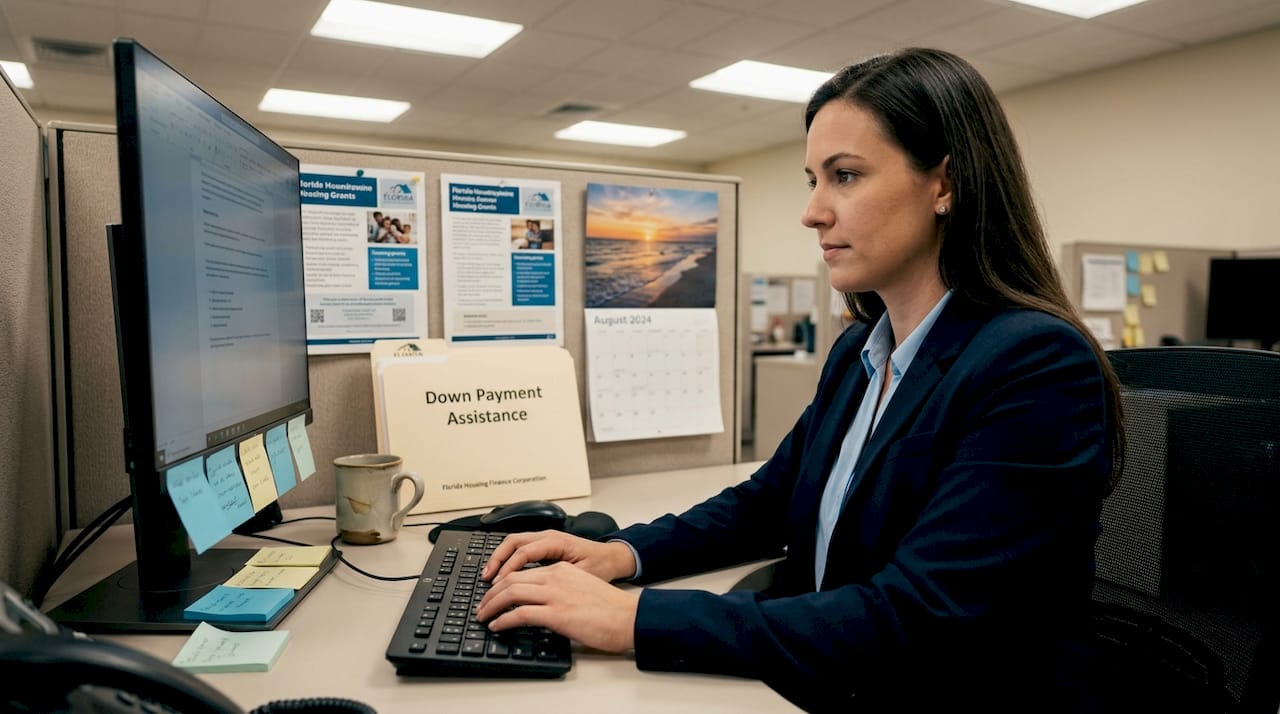
Florida Assist (FL Assist) provides up to $10,000 in down payment and closing cost assistance. It’s a deferred second mortgage with no interest and no monthly payments. The balance is only repaid when you sell or refinance, making it a very low-pressure option for buyers who plan to stay in their home long-term.
Florida Homeownership Loan Program (FL HLP) offers up to $10,000 as a second mortgage at 3% interest over 15 years. Unlike FL Assist, this one does have a monthly payment, but the rate is still far below market. If you sell or refinance before the 15 years are up, the remaining balance becomes due.
Hometown Heroes Housing Program is one of the most talked-about programs in recent years. It targets Florida’s community workforce, including teachers, nurses, firefighters, law enforcement officers, and veterans. Eligible buyers can receive up to 5% of the first mortgage loan amount (capped at $35,000) in down payment and closing cost assistance. This is structured as a 0%, non-amortizing second mortgage.
City and county programs add another layer of options. Miami-Dade, Broward, Palm Beach, Hillsborough, and Orange counties all run locally funded programs with their own eligibility rules and funding amounts. Some offer grants (money you don’t repay) rather than deferred loans. Use the HUD Florida directory to find what’s active in your specific area.
Pro Tip: Funding for many of these programs is limited and distributed on a first-come, first-served basis. Don’t wait until you’ve found a home to start your application. Get pre-qualified and apply early so you’re ready to move quickly.
If you’re buying in Southwest Florida, Naples home loan assistance is worth exploring alongside these statewide options, since local programs can sometimes offer more targeted support.
Comparing Florida homebuyer grants: which is best for you?
With a list of options in hand, let’s compare the programs directly so you can spot the best fit.
Choosing between programs comes down to three factors: how much help you need, where you’re buying, and what you do for a living. Here’s a direct comparison to help you think through the decision.
A few practical guidelines to help you narrow it down:
- If you work in a qualifying profession, Hometown Heroes should be your first stop. The potential for up to $35,000 in assistance is significantly higher than other statewide programs.
- If you're a general buyer without a qualifying profession, FL Assist is the simplest option because there are no monthly payments and no interest.
- If you're buying in a major metro area like Miami, Tampa, or Orlando, check local programs first. City-funded grants are sometimes true grants (no repayment) rather than deferred loans, which is a better deal if you qualify.
- If your income is close to the program limits, double-check the specific AMI thresholds for your county. The HUD Florida directory links directly to each program's details, including current income limits.
The best way to confirm what’s available in your area is to cross-reference state programs with local options. A buyer in Naples, for example, should look at both Florida Housing programs and Collier County-specific resources. Comparing Naples programs side by side with statewide options can reveal combinations that maximize your total assistance.
One thing many buyers overlook: you can sometimes stack programs. For example, a Hometown Heroes grant can be paired with a Florida Housing first mortgage. Always ask your lender and your local housing office whether layering is allowed before you assume it isn’t.
Situational recommendations: which grants work best for common scenarios
Let’s apply what you’ve learned with some scenario-based recommendations for Florida’s most common homebuyer situations.
Every buyer’s situation is different. Here’s how to think about grant selection based on who you are and where you’re buying.
- Low-income single buyer: Start with FL Assist for the $10,000 deferred assistance, and pair it with a Florida Housing first mortgage. Check your county's local programs as well, since many target buyers below 80% AMI with additional funds. Your homebuyer education certificate will be required, so complete that early.
- Family with moderate income: FL HLP or FL Assist work well here. If your household income is slightly above the low-income threshold but still under the program cap, you may qualify for less assistance but still receive meaningful help. Look into county programs in Hillsborough, Orange, or Palm Beach if you're buying in those areas.
- Veterans and active military: Hometown Heroes covers veterans and active-duty military personnel. Combined with a VA loan (which requires no down payment), the Hometown Heroes funds can cover your closing costs entirely in many cases. This combination is one of the strongest available to any buyer in Florida.
- Teachers, nurses, and first responders: Hometown Heroes was built for you. The program covers a wide range of community workforce professions, and the up to $35,000 in assistance can make a dramatic difference in your upfront costs. Confirm your employer qualifies under the program's current guidelines.
- Rural buyers: USDA loans pair well with Florida Housing programs for buyers purchasing in eligible rural areas. The USDA loan itself offers 100% financing, and layering a closing cost grant on top can mean buying a home with very little out of pocket.
No matter which scenario fits you best, always verify current program availability through the HUD Florida directory before counting on a specific grant. Programs open and close based on funding availability, and what was active last year may be paused today. Your local housing office and your lender are your best real-time sources.
If you’re a first-time buyer in Southwest Florida, reviewing Naples first-time buyer tips alongside these scenario recommendations can help you build a complete picture of what’s available locally.
What most first-time Florida buyers miss about grant programs
You’ve seen the lists and comparisons. Here’s what experience has shown us about common mistakes and overlooked opportunities.
The most surprising thing we see? Well-qualified buyers who skip grants entirely. Not because they don’t need the money, but because they assume they won’t qualify. They hear “income limits” and assume they earn too much. They hear “first-time buyer” and assume a home they owned a decade ago disqualifies them. In most cases, these assumptions are wrong.
The three-year rule on the first-time buyer definition catches a lot of people off guard in a good way. Someone who owned a condo in 2018 and has been renting since 2021 may qualify as a first-time buyer under most program definitions. Always check before you assume.
Another common mistake is waiting until after you’ve found a home to look into grants. Many programs require pre-approval through a participating lender before you can even apply. If you fall in love with a house and then start the grant process from scratch, you risk losing the home while paperwork catches up.
There’s also a real cost to not working with a lender who knows these programs well. A lender unfamiliar with Florida Housing programs may not mention that your loan type qualifies for a grant. You could close on a home and leave thousands of dollars on the table simply because nobody brought it up.
Our advice: contact both a HUD-approved housing counselor and a Florida-experienced mortgage broker before you start house hunting. The counselor will walk you through grant eligibility. The broker will confirm which loan products pair with those grants. Together, they cover all the angles.
Keep copies of every document you submit. Grant programs have strict deadlines and sometimes require resubmission if funding cycles reset. Staying organized protects your place in line.
For buyers in Southwest Florida, our insights on Naples grants reflect real-world experience helping buyers navigate these exact challenges. The programs are worth the effort, but only if you approach them with accurate information and a plan.
Ready to take the next step? Local guidance for Florida homebuyers
To make the most of these grant programs, partner with a trusted lender who knows Florida’s first-time buyer landscape.
Platinum Capital Financial specializes in helping Florida homebuyers qualify for both grants and affordable loan programs. We know which programs are currently funded, which loan types pair best with state and local assistance, and how to structure your application to maximize your chances of approval.

Working with a local expert means you won’t miss a grant deadline or overlook a county-specific program that could save you thousands. Whether you’re buying in Naples, Tampa, Orlando, or anywhere in between, our team is ready to walk you through your options. Reach out today to explore local Florida home loans and get a personalized consultation tailored to your income, location, and homebuying goals. Your first home is closer than you think.
Frequently asked questions
What is the income limit for Florida homebuyer grants?
Income limits vary by program and county, so there’s no single answer. Use the HUD Florida directory to find current AMI thresholds for your specific county and program.
Can I use more than one homebuyer grant in Florida?
Some programs do allow layering multiple grants, but each program has its own rules about stacking. Always confirm with the program administrator and your lender before assuming you can combine assistance.
How do I find grants available in my Florida city or county?
The HUD county directory lets you filter homebuyer assistance programs by location, giving you a current list of what’s active in your specific area.
Are there grants specifically for teachers, police, or veterans in Florida?
Yes. The Hometown Heroes Housing Program covers a wide range of community workforce professions, including teachers, law enforcement, and veterans. Check the HUD Florida directory for additional specialty programs in your county.
Get a free instant rate quote
Take a first step towards your dream home

Free & non binding
No documents required
No impact on credit score
No hidden costs
.svg)
.svg)
.svg)
.svg)

.svg)
