
.svg)
Mortgage News
Business Owners Ask: Is a Commercial Loan Against Property the Right Funding Option
For many business owners, access to capital is essential for growth, expansion, or managing cash flow. One popular option is a commercial loan against property, where you use real estate as collateral to secure funding.
This type of loan can unlock significant capital, but it is not the right fit for every situation. Understanding how it works, its benefits, and its risks will help you decide wisely.
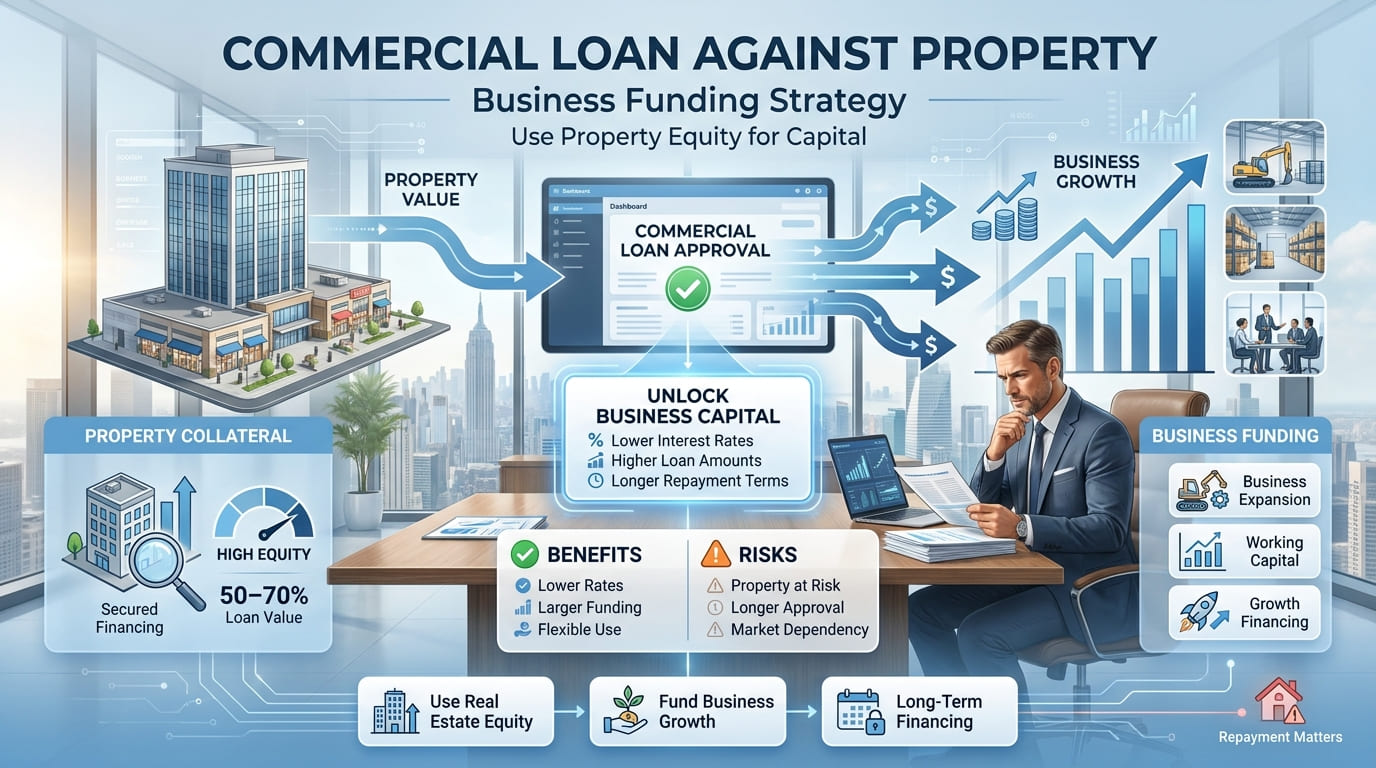
What Is a Commercial Loan Against Property
A commercial loan against property is a secured loan where you pledge a residential, commercial, or industrial property to obtain funds for business or personal use.
Key features include:
- Loan is backed by property value
- Higher loan amounts compared to unsecured loans
- Lower interest rates than business loans without collateral
- Flexible usage of funds
Lenders assess the market value of your property and offer a percentage of that value as a loan.
How It Works
The process is straightforward:
- Property evaluation by the lender
- Determination of eligible loan amount
- Approval based on income and credit profile
- Disbursement of funds
Typically, lenders offer around 50 percent to 70 percent of the property value, depending on risk and property type.
When This Loan Option Makes Sense
A commercial loan against property can be useful in several situations:
Business Expansion
Funding for new locations, equipment, or scaling operations
Working Capital
Managing daily operational expenses or short term cash needs
Debt Consolidation
Replacing high interest loans with a lower cost secured loan
Large Investments
Supporting long term business growth strategies
Benefits of a Commercial Loan Against Property
Lower Interest Rates
Because the loan is secured, rates are generally lower than unsecured business loans.
Higher Loan Amounts
You can access larger funds based on property value.
Longer Repayment Tenure
Repayment periods are often longer, which reduces monthly payment pressure.
Flexible Usage
Funds can be used for various business or financial purposes.
Risks You Should Consider
While the benefits are strong, there are important risks.
Property Is at Risk
Failure to repay can result in loss of your pledged property.
Longer Approval Process
Documentation and valuation can take time.
Market Value Dependency
Loan amount depends on property valuation, which may fluctuate.
Interest Cost Over Time
Even with lower rates, long tenure can increase total interest paid.
Loan Against Property vs Unsecured Business Loan
How to Decide If It Is Right for You
Before choosing this option, evaluate:
- Your ability to repay the loan
- The importance of the pledged property
- The purpose of the funds
- Alternative financing options
This loan works best when used for productive purposes that generate returns.
Key Factors That Affect Your Loan Terms
Property Value
Higher value properties can unlock larger loan amounts.
Credit Profile
Strong credit improves approval chances and rates.
Business Financials
Stable income supports better loan terms.
Loan Tenure
Longer tenure reduces monthly payments but increases total interest.
When You Should Avoid This Loan
A commercial loan against property may not be suitable if:
- Your income is unstable
- You are unsure about repayment capacity
- The property is critical for personal or business use
- You only need a small amount of funding
In such cases, alternative options may be safer.
Frequently Asked Questions
1. What is a commercial loan against property
It is a secured loan where you use property as collateral to obtain funds for business or financial needs.
2. How much loan can I get against property
Typically, lenders offer 50 to 70 percent of the property’s market value.
3. Are interest rates lower for this loan
Yes, because it is secured, interest rates are generally lower than unsecured loans.
4. Can I use the loan for any purpose
In most cases, yes. Funds can be used for business expansion, working capital, or other financial needs.
5. What happens if I cannot repay the loan
The lender may take legal action and could repossess the property used as collateral.
Final Thoughts
A commercial loan against property can be a powerful financing tool for business owners who need substantial funding at relatively lower interest rates. However, it comes with the responsibility of securing your loan against a valuable asset.
If used strategically for business growth, it can deliver strong returns. But if mismanaged, it can put your property at risk. Careful planning and financial discipline are essential before making a decision.
Get a free instant rate quote
Take a first step towards your dream home

Free & non binding
No documents required
No impact on credit score
No hidden costs
.svg)
.svg)
.svg)
.svg)

.svg)
